Copyright in AI-Generated Content: What Human Authorship Actually Requires
- August 10, 2026
- Posted by: allan
- Category: Uncategorized
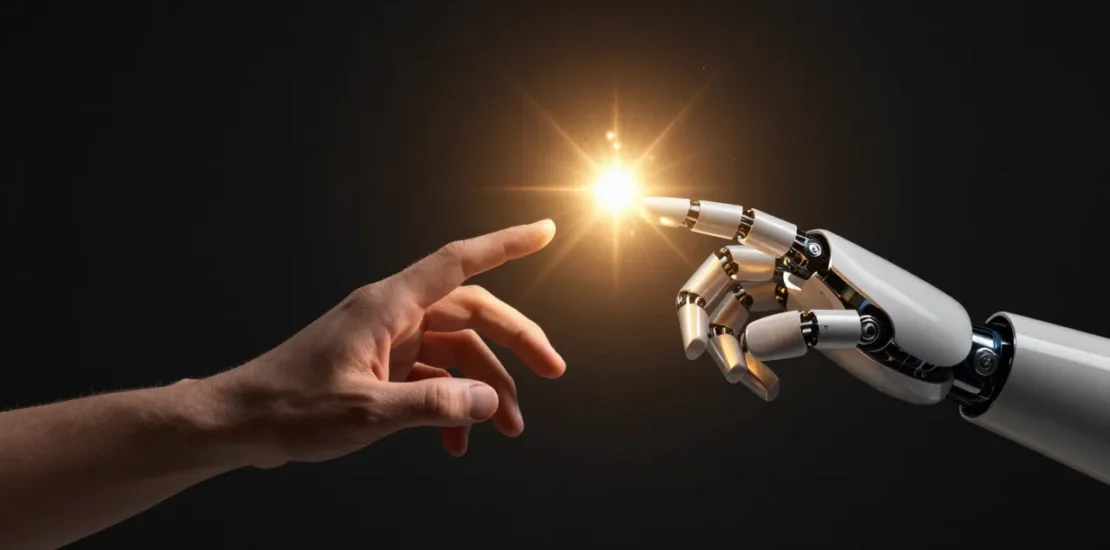
If your business uses AI tools to generate marketing copy, blog posts, product images, social media graphics, or any other creative content, you are facing a legal question that did not exist five years ago: do you actually own what that AI just made?
The answer, under current US law, is more complicated than most business owners realize — and getting it wrong can leave your company exposed in ways that are both expensive and difficult to fix. Competitors may freely copy content you cannot protect. Licensing deals may fall apart because your AI-generated assets have unclear ownership status. Investors conducting due diligence may flag your IP portfolio as inadequately documented.
This post explains, in plain terms, what the law actually requires for copyright protection of AI-assisted content, where the current legal lines are drawn, and what practical steps your business can take right now to maximize the protection available to you.
The Foundation: Why Copyright Requires Human Authorship
Before getting into the specifics of AI, it helps to understand why human authorship is the baseline requirement at all. This is not simply a policy preference — it is baked into the US Constitution itself.
Article I, Section 8 of the Constitution gives Congress the power to “promote the Progress of Science and useful Arts, by securing for limited Times to Authors and Inventors the exclusive Right to their respective Writings and Discoveries.” That word “authors” has always carried a specific meaning in American law.
In 1884, the Supreme Court addressed the question directly in Burrow-Giles Lithographic Co. v. Sarony, 111 U.S. 53, when it was asked whether photographs could receive copyright protection. A lithography company argued that photographs were not “writings” produced by an “author” because cameras, not people, technically created them. The Court disagreed, but its reasoning is critical: it defined an author as “he to whom anything owes its origin; originator; maker; one who completes a work of science or literature.” The Court repeatedly described authors as human persons and characterized a copyright as “the exclusive right of a man to the production of his own genius or intellect.” The photographs at issue were protectable, the Court held, because the photographer made the creative decisions — the composition, the arrangement of the subject, the pose, the lighting — that produced the image. The camera was a tool in the service of a human creator’s vision, not the author itself.
More than a century later, the Supreme Court reinforced the originality side of this analysis in Feist Publications, Inc. v. Rural Telephone Service Co., 499 U.S. 340 (1991). Copyright, the Court explained, requires “independent creation plus a modicum of creativity.” It is not enough to have simply invested labor or effort. The “sweat of the brow” — working hard to compile information, for instance — does not create copyrightable expression unless a human mind made original creative choices in producing it. The constitutional structure demands that human creativity, not mechanical process, be the engine that generates protectable expression.
These two cases, Burrow-Giles and Feist, together establish the framework that governs AI-generated content today: copyright protects human creative expression, not the output of automated processes operating without meaningful human authorship.
The Copyright Office’s Position: What the Agency Says
The US Copyright Office is the federal agency that administers the copyright registration system, and it has issued progressively clearer guidance on AI-generated works over the past several years.
The March 2023 Registration Guidance
On March 16, 2023, the Copyright Office published a formal Statement of Policy in the Federal Register (88 FR 16190) that remains the operative registration guidance for AI-assisted works. Its core holding is straightforward: the Office “will not register works produced by a machine or mere mechanical process that operates randomly or automatically without any creative input or intervention from a human author.”
The Statement makes clear that the key analytical question is whether “the ‘work’ is basically one of human authorship, with the computer [or other device] merely being an assisting instrument, or whether the traditional elements of authorship in the work (literary, artistic, or musical expression or elements of selection, arrangement, etc.) were actually conceived and executed not by man but by a machine.”
On the question of prompting specifically, the Office was direct: when an AI technology receives solely a prompt from a human and produces complex written, visual, or musical works in response, “the ‘traditional elements of authorship’ are determined and executed by the technology — not the human user.” The Office analogized prompts to “instructions to a commissioned artist — they identify what the prompter wishes to have depicted, but the machine determines how those instructions are implemented in its output.” A user who tells a text-generating AI to “write a poem about copyright law in the style of William Shakespeare” can expect a poem about copyright law in Shakespearean style, but the technology will decide the rhyming pattern, the word choices, and the structure. Those expressive elements belong to the machine, not the prompter.
However, the Statement also makes clear that this does not make AI a copyright dead zone. A work containing AI-generated material “will also contain sufficient human authorship to support a copyright claim” when, for example, a human selects or arranges AI-generated material in a sufficiently creative way, or an artist modifies AI-generated material to a degree that the modifications themselves meet the standard for protection. In those cases, copyright protects the human-authored aspects of the work, not the AI-generated material itself.
The January 2025 AI Report, Part 2
In January 2025, the Copyright Office released Part 2 of its multi-part study on copyright and artificial intelligence, addressing the copyrightability of AI-generated content in greater depth than any prior guidance. The Office reached several important conclusions:
First, the Office reaffirmed that the existing legal framework is sufficient to resolve these questions — meaning Congress does not need to pass new legislation to address AI copyrightability, and existing case law and registration practice govern.
Second, the Office established a clearer standard: copyright protection requires “sufficient human control over the expressive elements” of the work. Prompts alone, under current generative AI technology, do not provide that control. The machine decides too many of the expressive variables.
Third, the Office drew a meaningful distinction between prompts on one end of the spectrum and other forms of human involvement. Where a human-authored work is perceptible in an AI output, where a human makes creative selections or arrangements of AI-generated material, or where a human makes creative modifications to AI outputs, copyright protection is available for those human contributions. The case for protection, in other words, strengthens considerably when a human is doing more than typing a request and accepting whatever the system produces.
Fourth, the Office concluded that the case has not been made for creating a separate, new form of legal protection for purely AI-generated content. Under current law, if a machine generates it without sufficient human creative input, it falls into the public domain.
Zarya of the Dawn: The First Major Registration Decision
In February 2023, the Copyright Office addressed a real-world registration dispute that became the template for how these rules apply in practice. Kristina Kashtanova, an artist, had created a graphic novel called Zarya of the Dawn and obtained a copyright registration for the entire work — including images generated using the AI platform Midjourney.
When the Copyright Office learned that the images had been AI-generated, it initiated a review of the registration. On February 21, 2023, the Office issued a decision canceling the original registration and reissuing it with a significantly narrowed scope.
The Office concluded that Kashtanova “is the author of the Work’s text as well as the selection, coordination, and arrangement of the Work’s written and visual elements.” That portion of the copyright registration stood. Her creative choices about how to combine the human-authored text with the AI-generated images — the editorial and arrangement decisions she made in producing the final work — constituted sufficient human authorship.
But the individual images themselves, generated by Midjourney in response to Kashtanova’s prompts, received no copyright protection. The Office found that she did not exercise sufficient creative control over how Midjourney rendered those images. Unlike a photographer who makes conscious decisions about composition, focus, and exposure, a Midjourney user inputs a text description and receives an image whose specific visual expression is determined by the AI system, not the user.
The Zarya of the Dawn decision teaches a fundamental lesson that applies to virtually every business using generative AI tools today: the output itself may not be protectable, but the human creative work layered around and on top of it very well might be.
Thaler v. Perlmutter: The Courts Draw the Line on Pure AI Authorship
While the Copyright Office was developing its registration guidance, a parallel battle was being fought in federal court. Dr. Stephen Thaler, a computer scientist, created an AI system called the Creativity Machine, which autonomously generated an image titled “A Recent Entrance to Paradise.” Thaler applied to register the copyright in that image, listing the Creativity Machine as the sole author.
The Copyright Office denied the application, holding that the work lacked human authorship. Thaler sued in the US District Court for the District of Columbia (Thaler v. Perlmutter, Case No. 1:22-cv-01564), arguing that existing copyright law could accommodate AI authorship or should be interpreted to do so.
In August 2023, the District Court rejected his argument, ruling that human authorship is “a bedrock requirement” of copyright. The court declined to extend copyright protection to works created autonomously by machines.
Thaler appealed to the US Court of Appeals for the DC Circuit, which affirmed the District Court in March 2025. The DC Circuit held that the Copyright Office had “appropriately denied Dr. Thaler’s application” because the work’s sole author was the Creativity Machine — a computer system, not a human being.
Thaler then sought review by the Supreme Court, which declined to hear the case in March 2026, leaving the DC Circuit’s ruling intact. The result: as a matter of settled federal law, an AI system cannot be an author under the Copyright Act, and a work created autonomously by AI without human creative contribution is not eligible for copyright protection.
The significance for businesses is direct. Content that your team did not meaningfully shape — content generated by an AI operating more or less on autopilot in response to minimal human input — is content that no one legally owns. It belongs to the public domain from the moment it is created.
The Spectrum: From Pure AI Output to Human-Authored Work
Neither the Copyright Office guidance nor the Thaler litigation addressed the full range of how businesses actually use AI tools, which is rarely either “fully autonomous AI” on one extreme or “AI never involved” on the other. Most real-world AI-assisted content creation falls somewhere on a spectrum, and understanding that spectrum is where practical legal advice becomes important.
The Unprotectable End
At one end sits content generated purely by AI in response to minimal human input. A one-line prompt fed into an image generator. A generic request to an AI chatbot to “write a product description for a standing desk.” A marketing email drafted entirely by AI with no human editing. Under current law, these outputs are not copyright-protectable, regardless of how creative or sophisticated they appear. The creative decisions — which words to choose, how to structure the argument, what visual elements to include — were made by the machine.
The critical business consequence: anyone can copy this content. Competitors can lift it verbatim. You have no legal basis to stop them.
The Protected Zone
At the other end sits content where a human author made the substantive creative decisions and used AI only as a tool in service of that creative vision — the way a photographer uses a camera, or a graphic designer uses Photoshop. Here the copyright protection attaches to the human creative expression, regardless of whether AI was involved in execution.
Between these poles lies a large and legally uncertain middle ground. The Copyright Office has identified several categories of human contribution that move content toward the protected zone:
Selection and arrangement. A human who reviews dozens of AI-generated images and selects a specific subset, arranges them in a particular order, and combines them with human-authored text is making creative choices that the law recognizes. This is the Zarya of the Dawn model.
Creative modification. A human who takes AI-generated text and substantially rewrites it — changing the structure, replacing phrases, adding original analysis or voice — is creating derivative human authorship on top of the AI output. The human-authored modifications are protectable.
Iterative creative direction. A human who engages in an extended, iterative process with an AI tool — providing detailed feedback, rejecting outputs that do not match a specific creative vision, refining the output through multiple rounds of guided revision — may exercise greater creative control than someone who simply types a single prompt. The degree of control matters, though prompting alone remains legally insufficient under current guidance.
Embedded human-authored elements. When an AI tool generates content that visibly incorporates human-authored elements — a specific character design the human created, particular text the human drafted, a compositional approach the human specified in meaningful detail — the human-authored elements remain protectable.
What “Sufficient Human Creative Control” Means in Practice
The Copyright Office’s January 2025 report frames the standard as “sufficient human control over the expressive elements” of the work. That phrase does a lot of work, and unpacking it for your specific workflow matters.
Expressive elements are the specific choices that make a work what it is: in text, the particular words, sentence structure, tone, and argumentative organization; in images, the specific visual composition, color palette, line, and form. The question is always whether a human made those choices, or whether the AI made them.
Here are the practical scenarios that matter:
Prompting alone is not enough. The Office has said this clearly and repeatedly. No matter how elaborate or detailed your prompt is, if the expressive output is determined by the AI system, you do not have human authorship of that output. The prompt may itself be copyrightable text (if it is sufficiently creative), but that does not extend copyright to the image or article the AI generates in response.
Substantial human editing changes the analysis. If you take an AI-generated draft and edit it extensively — rewriting paragraphs, restructuring the argument, adding original analysis, reworking the voice throughout — the resulting work reflects your creative choices. The more substantial and specific those choices are, the stronger the copyright claim. If you correct grammar and swap out a few words, the analysis is weaker.
Human-designed components retain protection. If your design team creates original brand elements — a logo, a specific illustration style, a character — and then uses AI to generate content incorporating those elements, the original human-authored elements remain protectable. The AI-generated additions may not be, but the underlying human creative work is.
Curation as authorship. A human who reviews a large volume of AI-generated content and makes creative selection decisions — choosing which outputs to use, how to sequence them, which to combine — is exercising the kind of creative judgment that Feist recognized as sufficient originality. The key is that the selection decisions must be genuinely creative, not mechanical.
Workflow structure. Even the structure of how you use AI matters. An AI tool that you use to generate rough drafts which your team then substantially revises is a different legal situation than an AI tool running on autopilot to produce finished content your team publishes without meaningful review.
How to Document Your Creative Contributions
Documentation serves two purposes. First, it supports your copyright registration application with the Copyright Office. Second, it creates a contemporaneous record you can rely on in litigation if someone challenges the validity of your copyright or if you need to enforce it against an infringer.
What to Document and When
The Copyright Office’s March 2023 guidance specifies that applicants registering works containing AI-generated material must use the Standard Application and identify, in the “Author Created” field, the specific human authorship claimed. AI-generated material that exceeds a de minimis threshold must be explicitly disclaimed in the “Limitation of the Claim” section under “Material Excluded.”
For example, if you created a blog post where a human author drafted the outline, wrote the introduction and conclusion, and substantially revised AI-generated body sections, you might describe the human authorship as: “Human-authored text including introduction, conclusion, and substantial revision and editing of body content.”
The application also has a “Note to CO” field where you can provide additional detail. Use it.
Building a Documentation Practice
For ongoing AI-assisted content workflows, consider maintaining a simple internal record for each significant content asset. This does not need to be elaborate — a brief memo or log entry recording:
- The AI tools used and the nature of the prompts provided
- The human creative decisions made in the workflow (selection of outputs, specific edits, structural revisions, original elements contributed)
- Who on your team made those decisions and when
- Version history showing the evolution from AI output to finished work
This documentation does two things simultaneously: it makes copyright registration applications more defensible, and it forces your team to think clearly about where the human creative work actually lives in your workflow. If you cannot articulate what human creative choices shaped the final content, that is a signal that the copyright position may be weak.
Fixing Past Registrations
The Copyright Office guidance also addresses registrations already obtained for content that included undisclosed AI-generated material. If you previously registered work containing AI-generated content without disclosing it, you should consider filing a supplementary registration — a special registration type under 17 U.S.C. § 408(d) that corrects or amplifies an existing registration. The Office has warned that failing to update the record creates risk: if the Office later discovers the omission, it may take steps to cancel the registration, and under 17 U.S.C. § 411(b), a court may disregard a registration in an infringement action if it concludes the applicant knowingly provided inaccurate information.
Business Risks of Unprotected AI-Generated Content
The legal uncertainty is not abstract. It creates specific, concrete business risks that affect your competitive position, deal-making capacity, and litigation exposure.
Competitors Can Freely Copy
The most immediate risk is competitive. If your marketing content, product imagery, or other creative assets lack copyright protection because they are purely AI-generated, any competitor can copy them verbatim without legal consequence. You have no infringement claim. There is no legal basis to send a cease-and-desist letter, no basis to seek an injunction, no basis to recover damages. Your investment in producing that content provides you no legal protection against copying.
Licensing and Investment Due Diligence Problems
If your business depends on licensing your content — or if you are seeking investment, a strategic partnership, or an acquisition — the copyright status of your IP portfolio will be scrutinized. Sophisticated counterparties will ask about the provenance of your creative assets. AI-generated content that lacks clear copyright status is a liability in those conversations, not an asset. Investors and acquirers increasingly require representations and warranties about IP ownership, and uncertain AI-generated content makes those representations difficult to give.
Downstream Claims and Indemnification Exposure
When you license your content to others, you typically represent that you own it and have the right to license it. If the content contains AI-generated material whose copyright status is unclear or that you cannot validly claim to own, those representations may be inaccurate. Downstream licensees who rely on those representations and then face challenges to their use of the content may have claims against you for breach of warranty or indemnification.
Platform and Distribution Agreements
Many content distribution platforms, publishing agreements, and brand licensing arrangements require that the content creator represent ownership of all intellectual property rights. Unresolved questions about AI-generated content can create compliance problems with existing agreements, not just future ones.
Practical Guidance: When to Register, What to Document, How to Structure Your Workflow
When to Register
Copyright registration is not mandatory under US law — you obtain copyright automatically upon creating an original work. But registration is required before you can file an infringement lawsuit for domestic works, and it provides significant additional benefits: registration within three months of publication (or before infringement begins) makes you eligible for statutory damages up to $150,000 per work and attorneys’ fees. Without timely registration, you are limited to actual damages and lost profits, which are often difficult to prove and modest in amount.
For AI-assisted content, register when the human creative contribution is substantial enough to support a registration claim. For recurring content (a regular blog, a social media series, a content library), consider group registration strategies that allow you to register multiple related works efficiently.
Do not register purely AI-generated content as human-authored — that creates the false-registration risk discussed above.
How to Structure AI Content Workflows for Better Copyright Outcomes
The legal landscape rewards building human creative judgment into your AI content process at multiple stages, not just as a final check. Here is what that looks like practically:
Define creative intent before prompting. Before your team uses AI to generate content, document the creative direction: the specific visual style, the tone and voice, the argumentative structure, the target audience framing. This documentation supports the argument that human creative decisions preceded and guided the AI’s output.
Treat AI output as a draft, not a deliverable. Establish an internal standard that AI-generated content undergoes substantive human revision before publication. Not proofreading — substantive revision that reflects the author’s creative voice and judgment. The more your team writes into the content (rather than merely cleaning it up), the stronger the copyright position.
Designate human authors for each piece. Identify specific human team members as the authors of AI-assisted works and document their creative contributions. This creates clarity for registration applications and provides a human author to name if the copyright is later challenged or needs to be enforced.
Maintain version control. Keep records of the original AI output alongside the revised, human-authored final version. The contrast between the two demonstrates the scope of human creative contribution.
Layer human-authored elements. Where possible, incorporate original human-authored elements — custom graphics, original text passages, specific brand voice elements your team developed — into AI-assisted content. These elements anchor the copyright claim to human authorship.
Consult counsel before launching AI-heavy content initiatives. The law in this area is evolving, registration practices are developing, and the case-by-case nature of the analysis means that a workflow well-suited to one type of content may not work for another. Getting early advice is less expensive than retrofitting a content library that has developed without attention to these issues.
Conclusion
The legal framework for copyright in AI-generated content has come into clearer focus over the past three years, and the picture it presents is both challenging and workable for businesses that understand the rules.
The core principle is simple: copyright protects human creative expression, not AI output. The US Constitution, 140 years of case law from the Supreme Court, the Copyright Office’s formal guidance, and the federal courts in Thaler v. Perlmutter all point in the same direction. An AI system cannot be an author. A work generated autonomously by AI without meaningful human creative contribution falls into the public domain.
But this does not mean that businesses using AI tools are left without intellectual property protection. It means the protection attaches to the human creative work — the selection, the arrangement, the modification, the original elements that human authors contribute. The more substantively your team shapes AI-generated content into something that reflects human creative judgment, the stronger your copyright position.
The practical takeaway is this: treat AI as a powerful tool in service of human creative work, not as a replacement for it. Structure your workflows so that human creative decisions are documented and verifiable. Register the works that matter, disclose the AI involvement honestly, and claim the human authorship that genuinely exists. That is the approach that builds an IP portfolio with real value — one you can enforce, license, and rely on when it matters.
If you have questions about the copyright status of your existing content library, how to structure registration applications for AI-assisted works, or how to build workflows that maximize your intellectual property protection, we are here to help.
This post is for informational purposes only and does not constitute legal advice. For advice specific to your situation, please consult a qualified attorney.