
AI-Generated Documents and Work Product Protection: The 2026 Federal Court Split
- October 15, 2026
- Posted by: allan
- Category: Uncategorized
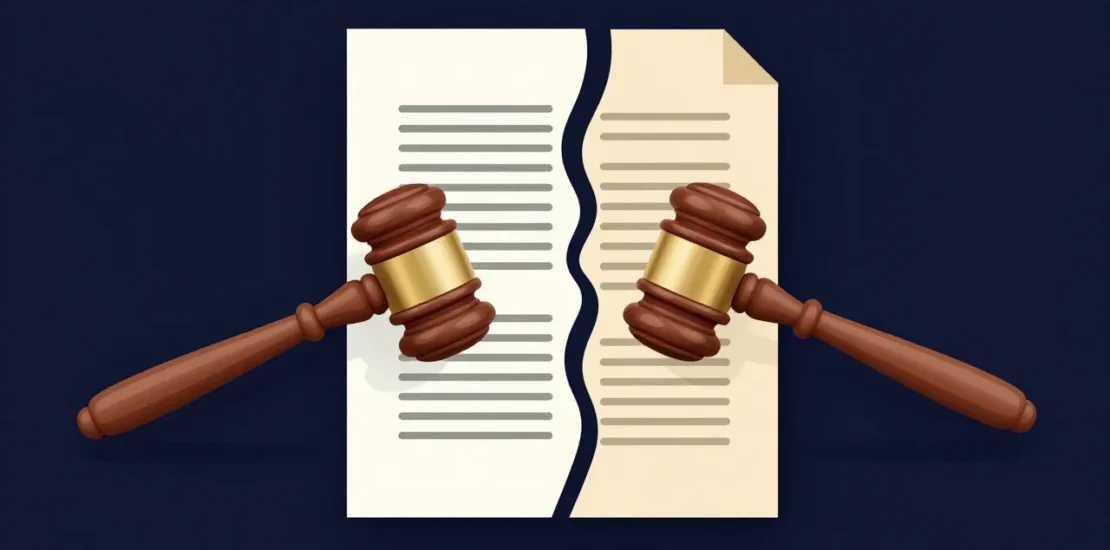
In the span of a single week in February 2026, two federal courts looked at nearly the same question — does using a generative AI tool to prepare litigation-related documents waive work product protection? — and reached opposite conclusions. The split has immediate practical consequences for every attorney who uses AI in litigation support, and for every business owner who uses AI tools to respond to legal disputes.
This post walks through both decisions, explains the doctrinal fault lines, and offers concrete guidance on how to structure your AI use to maximize the chance of protection regardless of which court’s reasoning ultimately prevails.
The Work Product Doctrine: A Brief Refresher
The work product doctrine, rooted in Hickman v. Taylor, 329 U.S. 495 (1947), and codified in Federal Rule of Civil Procedure 26(b)(3), shields materials prepared in anticipation of litigation from discovery by an adverse party. The doctrine protects two categories of material: (1) ordinary work product — documents and tangible things prepared for litigation — and (2) opinion work product — the mental impressions, conclusions, opinions, and legal theories of an attorney. Opinion work product receives near-absolute protection; ordinary work product can be overcome by showing substantial need and inability to obtain the equivalent without undue hardship.
The doctrine has always been technology-agnostic in the sense that no court has ever held that the medium of preparation — a yellow legal pad, a word processor, a legal research database — determines whether protection applies. What matters is whether the material was prepared in anticipation of litigation and reflects a party’s or attorney’s mental processes directed at that litigation. The 2026 decisions tested whether generative AI changes that analysis.
Warner v. Gilbarco, Inc.: AI as a Tool
On February 10, 2026, Magistrate Judge Patti of the United States District Court for the Eastern District of Michigan denied a motion to compel production of litigation-related documents that a pro se plaintiff had prepared using ChatGPT.
The Facts
The plaintiff, Tammy Warner, was proceeding without an attorney in an employment discrimination action against Gilbarco Veeder-Root. During discovery, she admitted to using ChatGPT to answer legal questions and help draft her filings. The defendants moved to compel production of Warner’s queries to ChatGPT and ChatGPT’s responses, arguing that by submitting her questions to a third-party AI platform she had waived work product protection.
The Holding
The court disagreed. It denied the motion to compel, holding that a pro se plaintiff’s use of a generative AI tool in connection with litigation does not waive work product protection. The court’s reasoning rested on two pillars.
First, AI platforms are “tools, not persons.” Just as using a word processor or a Westlaw search engine to prepare litigation materials does not expose those materials to discovery, using an AI drafting or research tool does not transform protected work product into discoverable material. The tool is a mechanism through which the party’s mental processes are expressed; it does not independently constitute a “person” to whom confidential disclosure is made.
Second, under Sixth Circuit law, work product waiver requires disclosure to an adversary or in a manner substantially likely to reach an adversary’s hands. Submitting prompts to a ChatGPT session — even one hosted on a platform that reserves some rights over user data — does not satisfy that test. The court found no evidence that the plaintiff’s specific queries were shared with, or accessible to, the defendants.
The court also emphasized that the materials at issue reflected Warner’s mental impressions about her own litigation: what legal theories she was pursuing, what facts she believed were significant, and how she was analyzing her case. Compelling production of that material would go to the heart of the thought-process protection the doctrine is designed to preserve.
United States v. Heppner: AI Is Not Counsel
One week later, on February 17, 2026, the United States District Court for the Southern District of New York reached the opposite result. In a criminal case, Judge Jed Rakoff ordered the defendant to produce documents he had generated using a public AI chatbot while seeking legal advice about his situation.
The Facts
The defendant, facing federal criminal charges, had used a public AI platform to ask questions about his legal situation and explore potential defenses. He had not retained an attorney at the time. When the government moved to compel production of those AI conversations, the defendant asserted attorney-client privilege and work product protection.
The Holding
Judge Rakoff rejected both claims and ordered production. His analysis identified three independent reasons why neither doctrine applied.
AI is not an attorney. The attorney-client privilege protects confidential communications between a client and a licensed attorney made for the purpose of obtaining legal advice. An AI platform, however sophisticated, is not a licensed attorney. It cannot form an attorney-client relationship. It has no professional obligations of confidentiality, no bar membership, and no fiduciary duty to the person communicating with it. Where there is no attorney, there is no privilege.
The communications were not confidential. The platform the defendant used expressly reserved the right to disclose user data to third parties under certain circumstances. The court found that submitting communications to a platform with such a policy negates the confidentiality element that privilege and work product both require. If the user cannot reasonably expect that the communication will be kept confidential, the protection fails at its foundation.
AI use was not directed by counsel. The work product doctrine protects materials prepared by a party or its attorney in anticipation of litigation. It is strongest when an attorney directs the preparation and the materials reflect attorney mental processes. Here, the defendant was acting entirely on his own, without any attorney direction, supervision, or involvement. The court viewed the AI conversations not as attorney-supervised litigation preparation but as an individual attempting to research his own situation — activity that, standing alone, does not generate work product protection.
Understanding the Split: Are These Cases Really Inconsistent?
At first glance the two decisions appear flatly contradictory. Look more carefully, however, and the doctrinal landscape is more nuanced. Several commentators have noted that the cases are distinguishable on facts that may explain — but do not fully resolve — the tension.
Civil vs. criminal context. Warner was a civil employment discrimination case; Heppner was a criminal prosecution. The government has broader discovery rights in criminal cases, and courts sometimes apply privilege and work product doctrines more strictly against defendants in that setting. Whether that distinction will hold up as the case law develops is uncertain.
Counsel involvement. In Warner, the pro se plaintiff was using AI to organize her own thoughts about her own case — material that courts traditionally protect even for unrepresented parties. In Heppner, the defendant was using AI as a substitute for obtaining legal advice from an actual attorney. Judge Rakoff’s reasoning was sharpest on this point: privilege requires a lawyer, and there was no lawyer.
Platform confidentiality policies. The Heppner court placed significant weight on the platform’s data-disclosure policy. This distinction matters practically: enterprise AI platforms with strong confidentiality terms and data isolation may be treated differently from consumer-grade public chatbots.
The “tool” vs. “third party” framing. The Warner court framed AI as a tool like any other drafting instrument. The Heppner court implicitly framed the AI platform as a third party to whom confidential information was disclosed. This is the deepest doctrinal fault line, and courts will continue to disagree until either the Supreme Court or a circuit court provides definitive guidance.
What the Cases Agree On
Despite their different outcomes, both decisions applied existing doctrine rather than creating new rules. Neither court said that AI categorically destroys or preserves protection. Both courts looked at the specific facts — who was involved, what platform was used, what the platform’s policies were, whether counsel was involved, and what the material reflected — and applied the traditional multi-factor analysis.
That is actually important news for practitioners: the doctrine is not being rewritten. What is being tested is how existing rules apply to a new technology. That means the traditional best practices for protecting work product remain relevant, and strategic structuring of AI use can materially affect outcomes.
Practical Guidance: How to Structure AI Use to Maximize Protection
Based on the Warner and Heppner decisions, the emerging guidance from bar associations, and the general principles of the work product doctrine, the following practices represent the current standard of care for attorneys and sophisticated business owners involved in litigation.
1. Use Enterprise-Grade, Confidential AI Platforms
The Heppner court’s emphasis on the platform’s data-disclosure policy is a warning about consumer AI tools. Any AI platform that retains the right to use, share, or review your prompts and outputs creates a confidentiality problem. Enterprise agreements with major AI vendors — Microsoft Copilot with appropriate data-processing terms, Westlaw AI or Lexis+ AI with attorney-specific privacy protections, or other platforms with explicit data isolation — substantially reduce this risk. Review your vendor’s data use policy before using any AI tool for litigation-related work.
2. Involve Counsel Early and Keep That Involvement Documented
Heppner’s weakest protection arose in part because the defendant was acting without attorney direction. When AI tools are used under an attorney’s supervision — as a tool to assist the attorney in doing work the attorney directs — the case for work product protection is significantly stronger. If you are a business owner facing litigation or anticipating a dispute, involve your attorney before using AI to draft responses, analyze claims, or research legal issues. The attorney’s direction creates the litigation-preparation nexus that anchors work product protection.
3. Maintain AI Outputs Within Your Attorney-Client Communication Chain
Work product is protected in part because it reflects attorney or party mental processes directed at the litigation. Where AI outputs are generated outside that chain — a business owner independently querying a public AI about a pending lawsuit without attorney supervision — protection is weakest. Keep AI-generated litigation research and drafts within your legal matter management systems, flagged as privileged and confidential, and route them through attorney review.
4. Do Not Treat AI Conversations as Inherently Protected
The post-Heppner landscape does not support assuming that AI-assisted work is automatically protected. Until there is settled appellate authority, the safest posture is to treat AI conversations about litigation as potentially discoverable and to structure the work accordingly. That means the actual content of your AI queries should not contain admissions, characterizations of facts, or strategy conclusions you would not want an adversary to see. Use AI to research, organize, and draft — not to record your candid assessment of the merits of the case in raw query form.
5. Review Platform Terms and Update Your Firm’s AI Policy
Every law firm and every business with significant litigation exposure should review its AI platform agreements and update its internal AI use policies to address: (a) which platforms are approved for litigation-related work; (b) what data processing and confidentiality terms govern those platforms; (c) how AI-generated materials are stored and labeled; and (d) how attorney supervision of AI use is documented. These are not merely administrative exercises — they are the building blocks of a privilege argument the next time a court has to decide whether your AI-assisted work is discoverable.
What to Expect Next
The Warner-Heppner split is unlikely to be the last word. Several factors will drive further development:
Additional district court decisions. Both cases were decided at the district level, and neither has been appealed to a circuit court. As more cases reach the appellate level, circuit courts will begin establishing binding precedent within their jurisdictions. The circuits are not uniform on work product doctrine generally, and AI cases will reflect those existing differences.
FRCP rulemaking. The Judicial Conference Advisory Committee on Civil Rules has been tracking AI-related issues. Amendment proposals addressing AI and discovery — whether to formally address AI-generated materials in Rule 26 or elsewhere — are a realistic near-term development.
Bar ethics guidance. State bar associations are issuing guidance on attorney AI use. Ohio’s 2026 AI Ethics Guide, issued by the Ohio Board of Professional Conduct, addresses platform confidentiality, attorney supervision, and verification duties. As bar guidance accumulates, courts will increasingly look to professional responsibility frameworks when evaluating whether an attorney’s AI use was consistent with duties of competence and confidentiality.
Platform policy evolution. AI vendors are rapidly updating their enterprise terms in response to legal market demand. The confidentiality argument that failed in Heppner may succeed on better-drafted platform terms.
Conclusion
The February 2026 split between Warner v. Gilbarco and United States v. Heppner illustrates that work product protection in the AI era is neither automatic nor categorically unavailable. Courts are applying existing doctrine to new facts, and the outcomes depend heavily on whether counsel is involved, what platform is used, what the platform’s confidentiality terms provide, and how the AI-generated material was created and stored.
The practical takeaway for litigators and business clients is to treat AI as a powerful tool that requires the same discipline as any other privileged work product: involve your attorney, use secure platforms with clear confidentiality terms, document the attorney-supervision structure, and do not assume that the work is protected until you have analyzed each of the relevant factors. The courts will keep developing this doctrine, but the fundamentals of work product protection remain the same — the question is whether your specific AI use fits within them.
This post is for general informational purposes only and does not constitute legal advice. Reading this post does not create an attorney-client relationship. If you have questions about your specific situation, consult a qualified attorney.